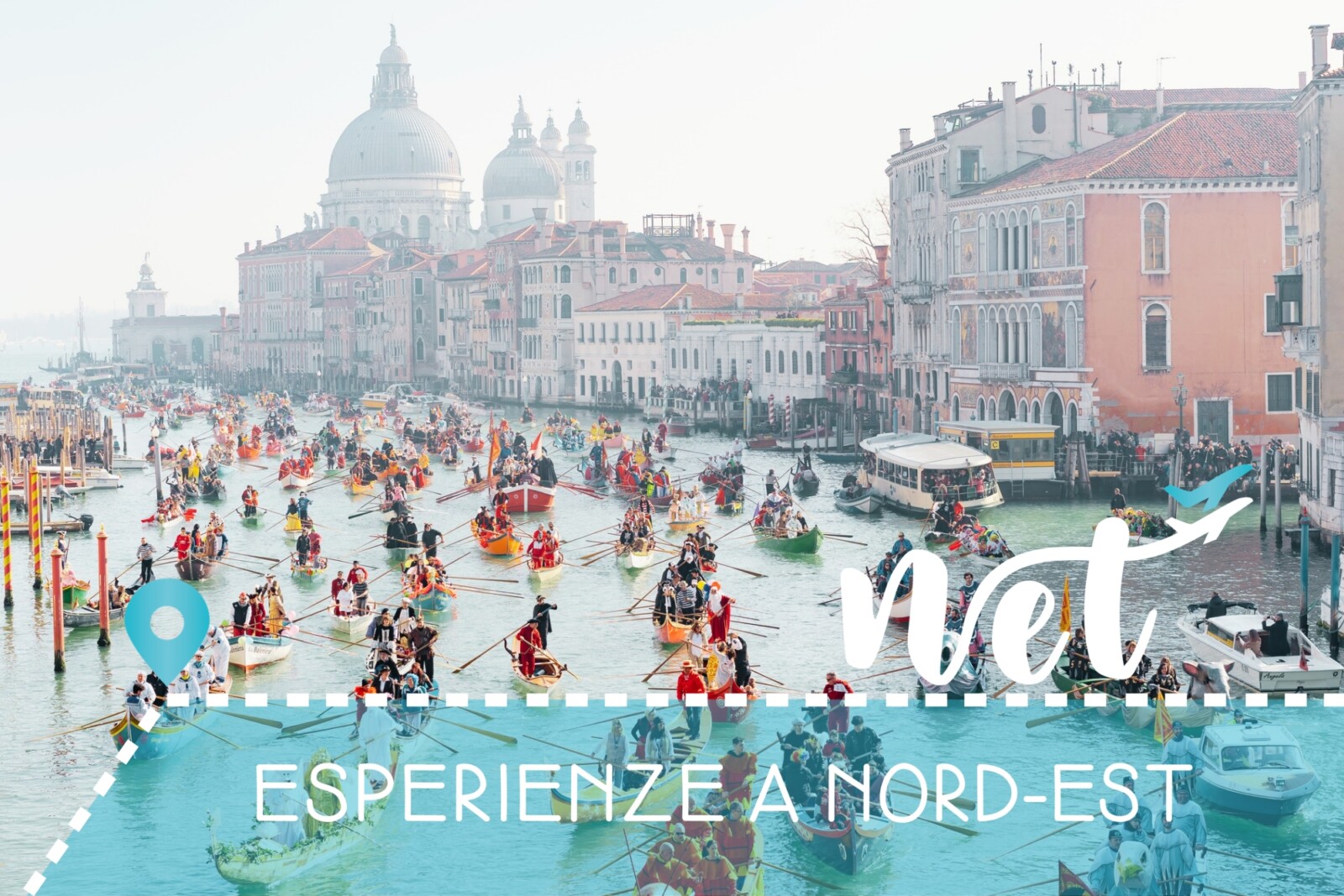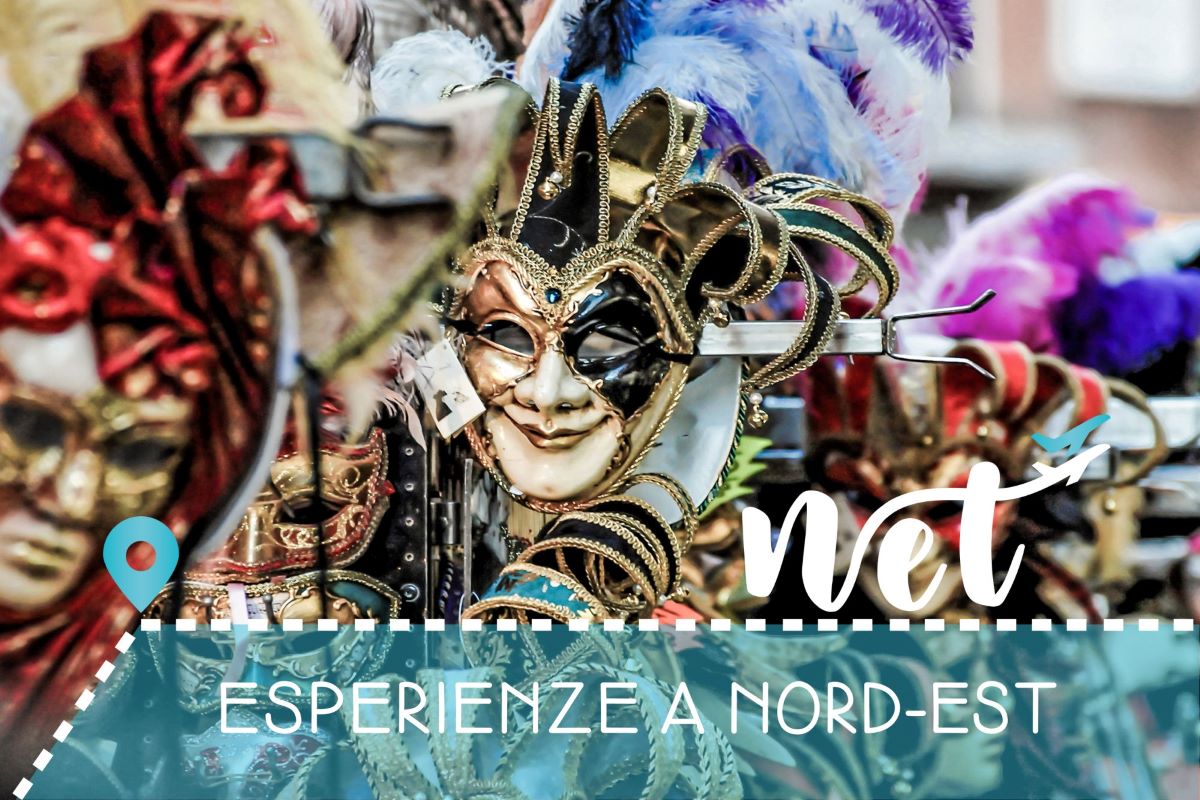
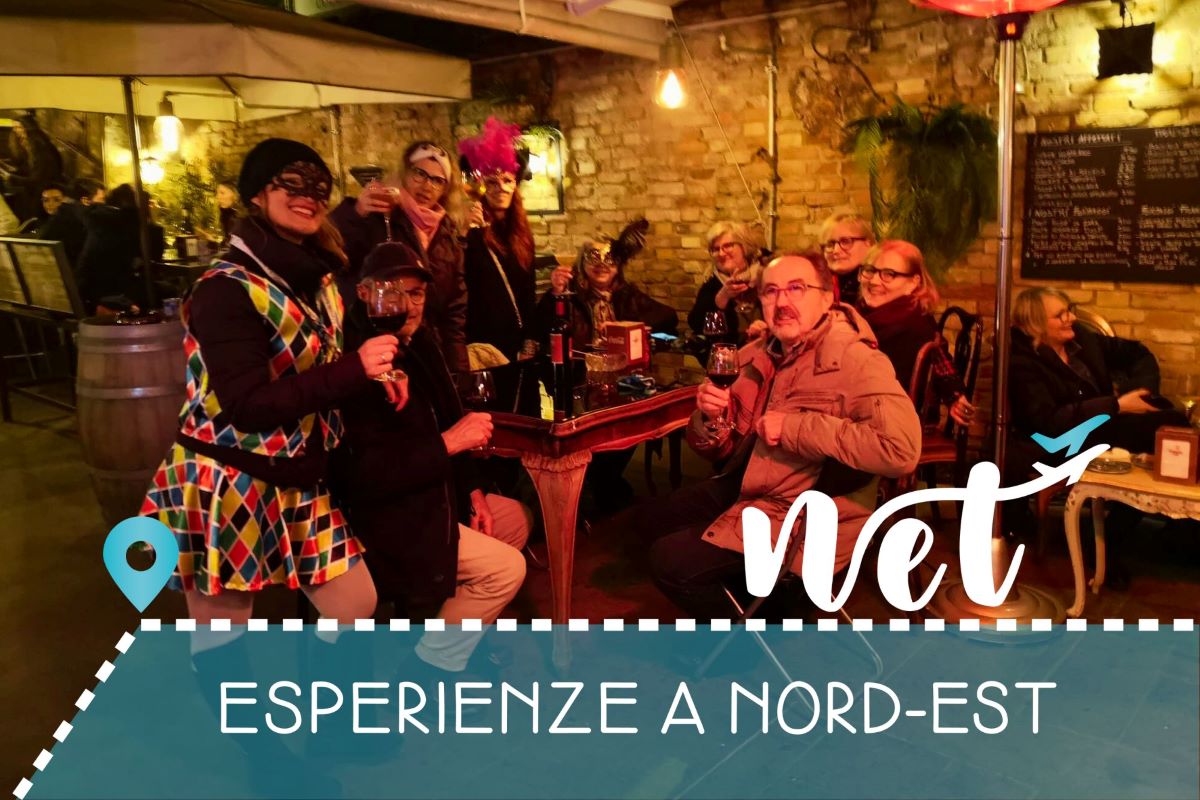
One of the questions we are asked most often by travelers is always the same: “But do you really experience the Venice Carnival every year?” The answer is yes. Because here Carnival is not an artificial parenthesis created for tourists, but a special time in the city, rooted in its history and its unique way of experiencing urban space.
A Carnival unlike any other
If you have seen Carnivals in other parts of the world – overwhelming, noisy, explosive – in Venice you will immediately feel a difference: here the spectacle is not only “outside,” but mostly “inside.” The Venetian Carnival is about details, looks, gestures, rules and subtle transgressions. And this particularity has a specific historical reason.
Not evasion, but political intelligence: because the mask was (also) control
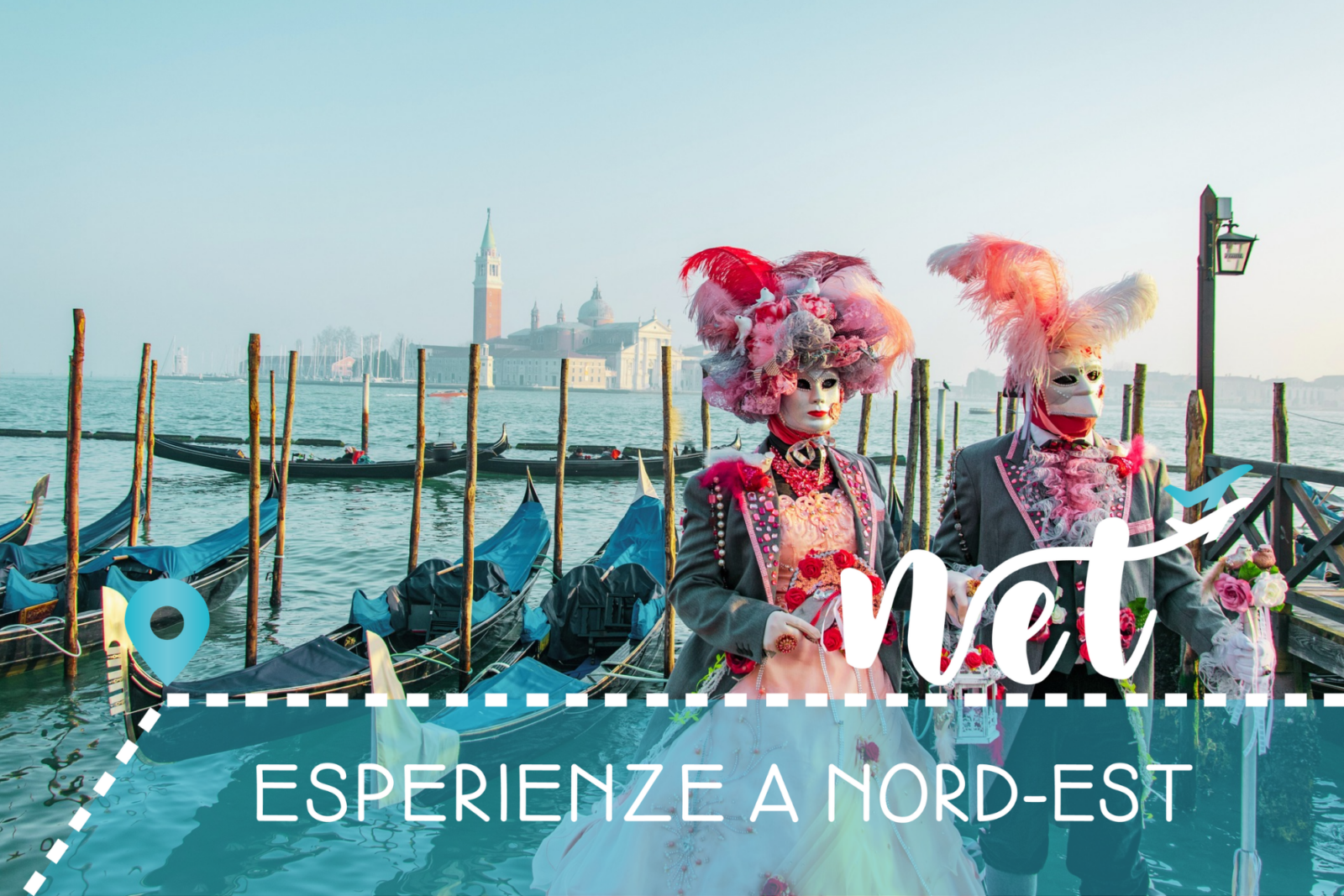
During the centuries of the Serenissima Republic, the mask was not just a disguise: it was a social tool. It allowed anonymity, temporarily suspended identity, and made barriers between classes more “porous.” In a complex city like Venice, this mechanism helped to lower tensions and maintain balance.
It was not anarchy. Quite the contrary: the use of masks and the periods in which to wear them were regulated and controlled. The implicit message was clear: you can allow yourself extraordinary freedom, but within a defined perimeter. This is also why we say that the Venetian Carnival was not escapism: it was control, balance, political intelligence.
When Carnival was celebrated in the height of the Serenissima season, Venice was transformed into an urban theater. St. Mark’s Square became the main stage, with shows and games attracting crowds and staging a surprisingly “orderly” celebration.
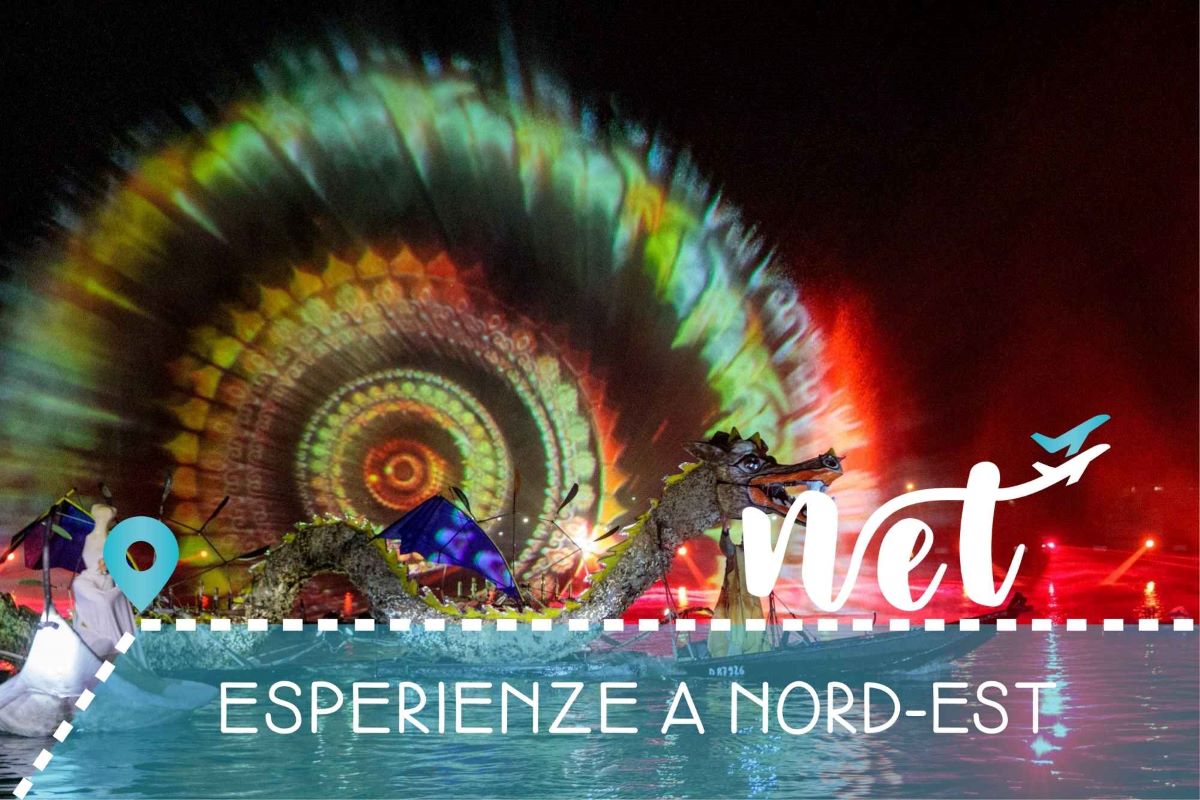
The dates: flights, tightrope walkers and public games
Among the most iconic events is the Flight of the Angel (originally also associated with the Columbine): an acrobatics suspended between the bell tower and the Ducal Palace, which has changed shape over time but has never lost its charm. And then the games of strength and skill, such as the Forces of Hercules, which tell of a physical, popular, participatory Carnival.
The suspension after Napoleon and the revival of 1979
With the fall of the Serenissima and the arrival of Napoleon in 1797, Carnival was effectively discontinued: the anonymity of the masks and the collective energy of the festivities were no longer compatible with the new political order. For over a century and a half Venice lost one of its strongest identity traditions.
Carnival officially returned to life in 1979, in a modern, cultural form-a conscious return, looking to the past to make it resonate in the present.
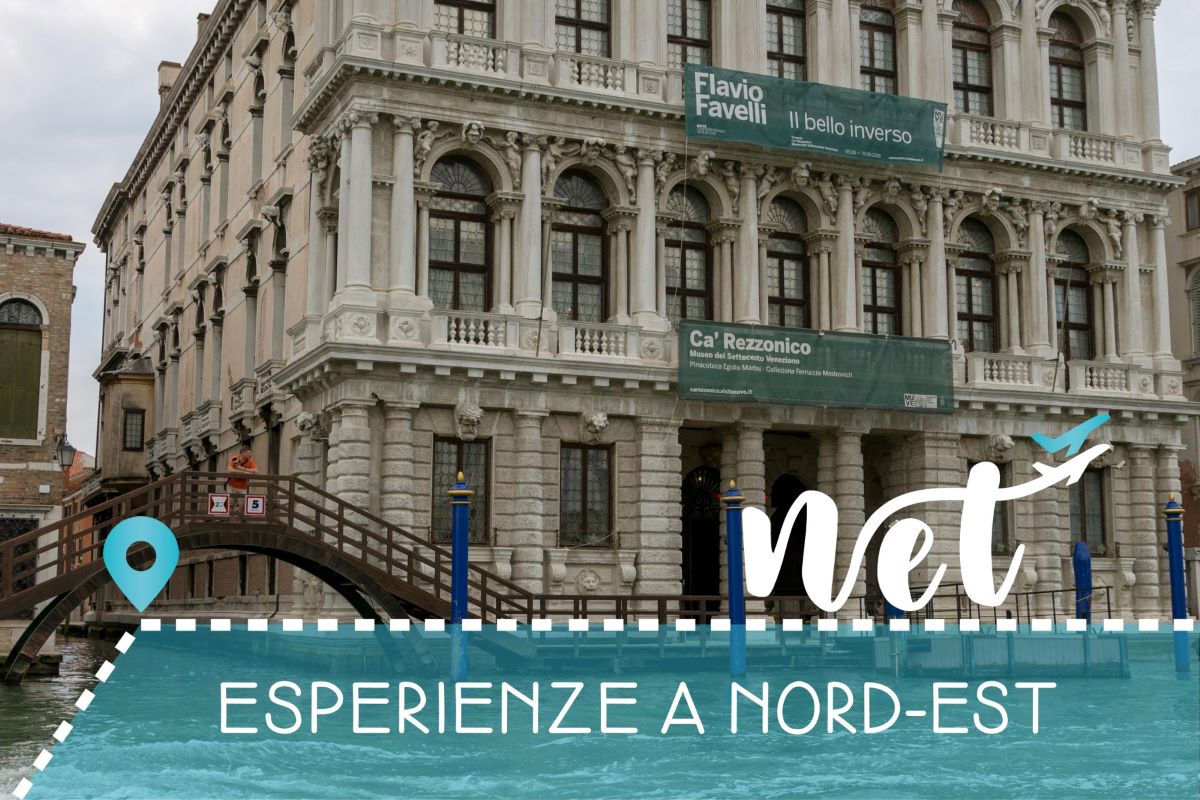
Ca’ Rezzonico: entering the Venetian eighteenth century.
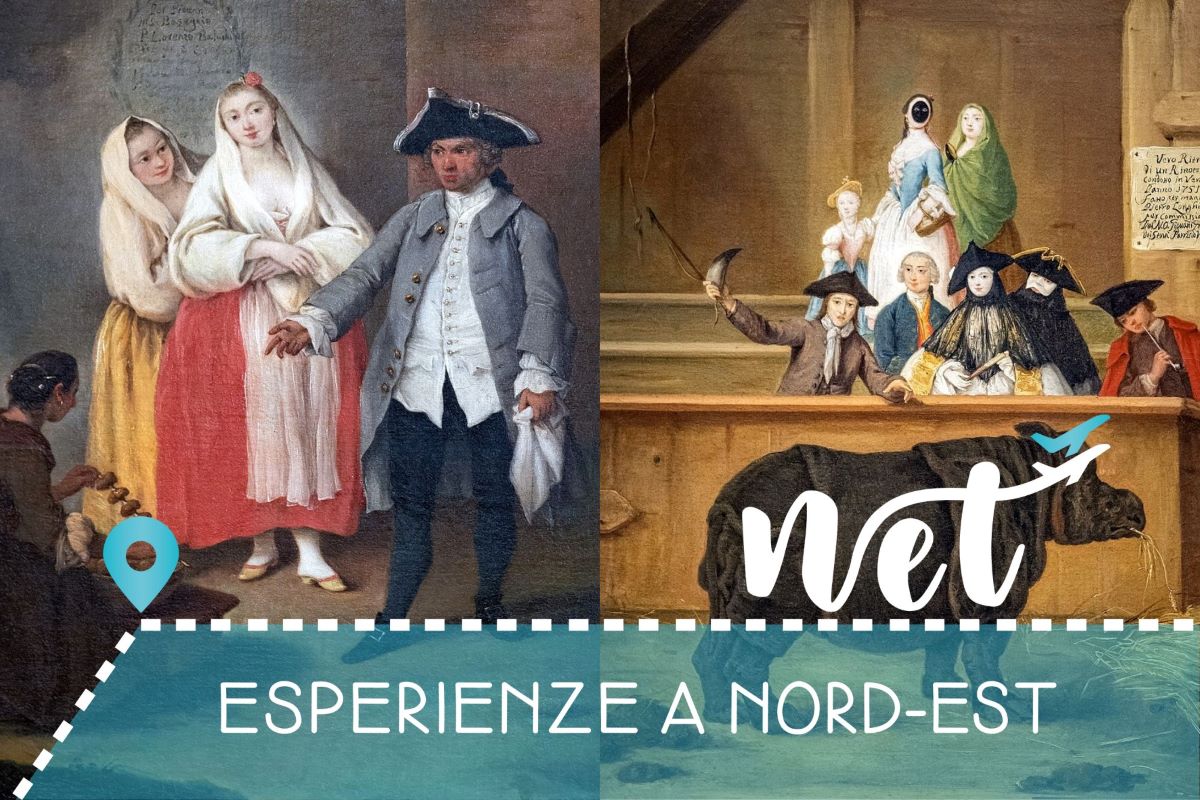
For those who want to understand Carnival beyond the most photographic masks, there is a perfect place: Ca’ Rezzonico, the Museum of 18th-century Venice. Here you don’t just find “beautiful rooms”: you find 18th-century Venice told from the inside, including houses, customs, social rituals and daily life.
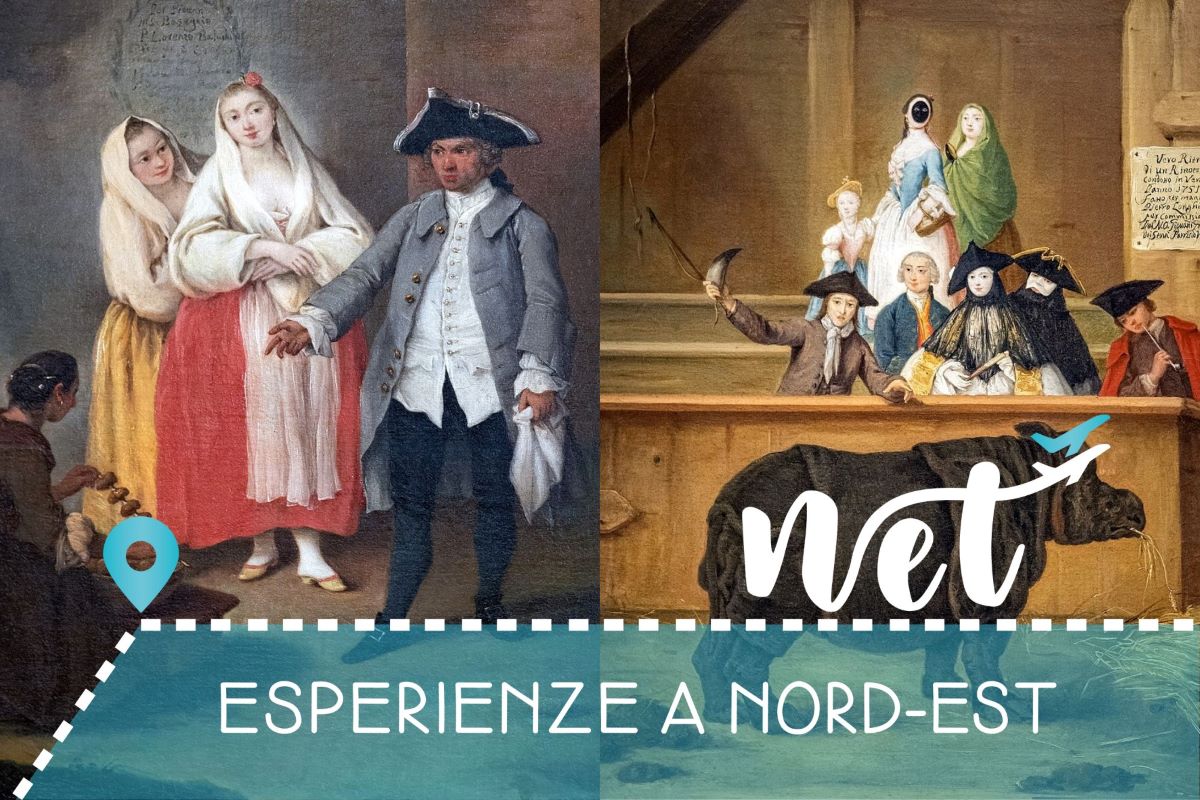
In the Ca’ Rezzonico itinerary, Pietro Longhi is an invaluable key: his canvases are small stories, domestic and social scenes in which we recognize gestures, clothes, masks, attitudes. Among his most beloved subjects: women with the moretta, household scenes, curious “fashion” shows, and – of course – the fritole seller.
Venetian fritole: the taste of Carnival (and a very rare detail)
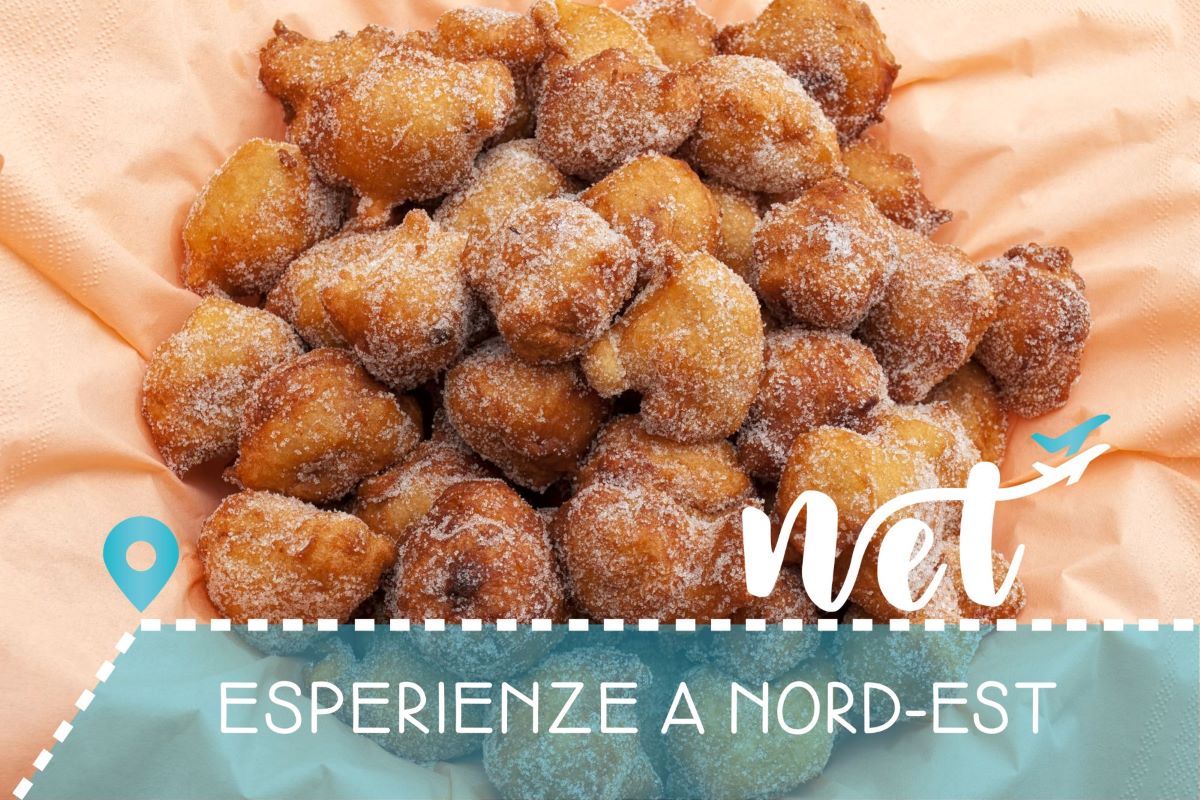
Fritola is the signature dessert of the Venetian Carnival, long before galani and modern variants. Leavened dough, raisins, pine nuts, sugar: a scent that in Venice means “Carnival” almost as much as a mask.
A historical and curious detail: in some traditional versions fritola had a central hole, because it was threaded on sticks and fried that way, then sold hot in the calli. Today it is a rarity – but for that very reason, when you find it, it is a little trip back in time.
And yes: even for us at NET – Experiences in the Northeast, there is a personal ritual every year: going to taste them. Because tradition is not only told: it is lived.
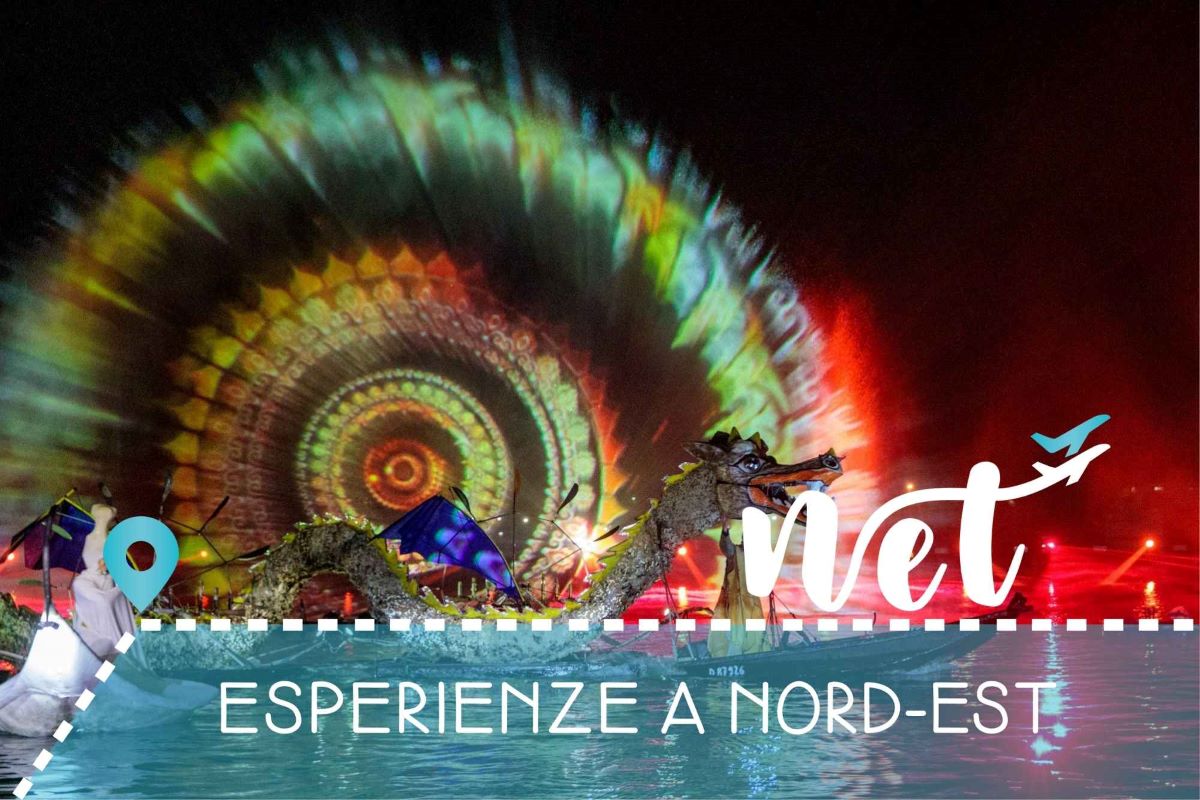
Carnival Today: Water Show at the Arsenal
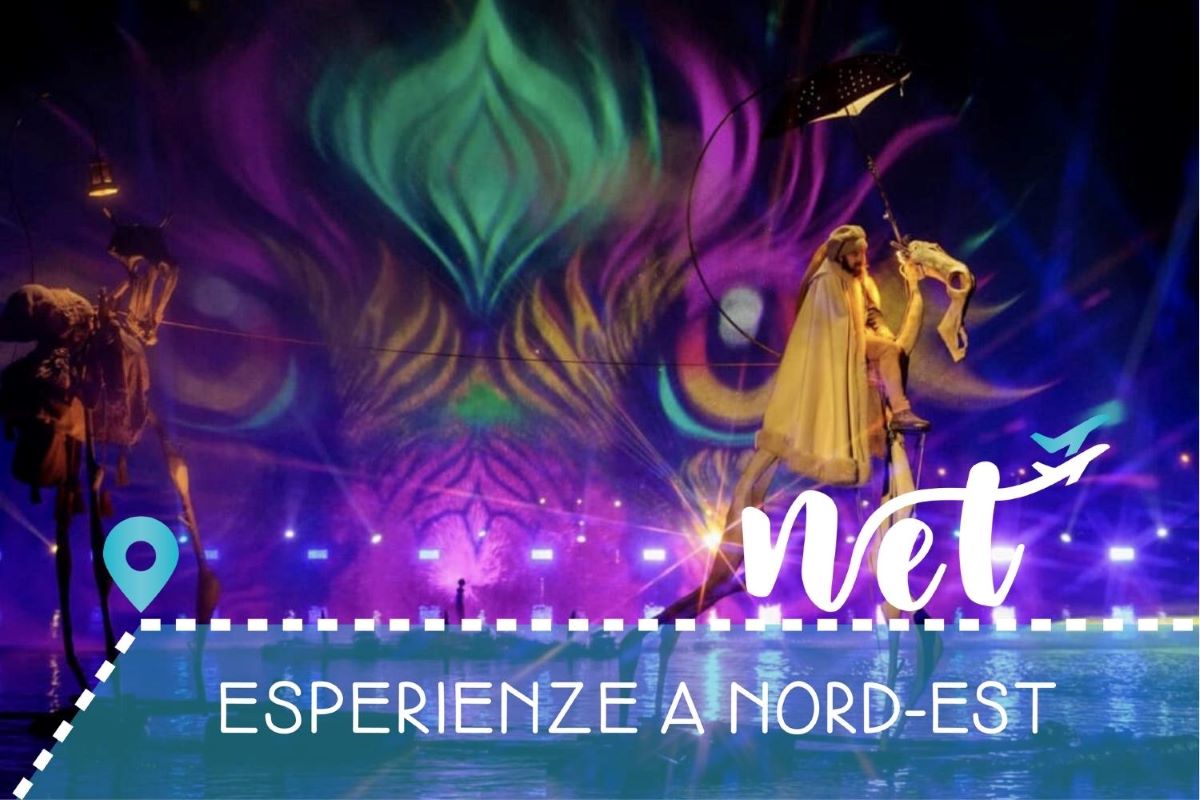
Alongside the historical traditions, the Venice Carnival also has contemporary events of great impact. One of the most striking is the Water Show at the Arsenale: an evening show on water, with lights, music, visual arts, performances and special effects in the unique setting of the Darsena.
Since its introduction in the official program in recent years, the show has become one of the most anticipated events. We at NET – Experiences in the Northeast are among the few agencies that continuously offers it, because it enhances Venice in a different way than usual: powerful, exciting, totally “on the water.”
Venice during Carnival is discovered by walking
Visiting Ca’ Rezzonico helps to understand the Carnival. But Venice in Carnival is really understood by walking it. During a guided walk, among campi, bridges and calli, the places of the festival and the signs of the Serenissima emerge: the geography of power, the spaces of the crowd, the paths of the masks, the stories behind the rituals.
This is where Carnival becomes an experience: not just an event to be seen, but a story to be walked through step by step.
Experience Carnival with NET – Experiences in the Northeast
Want to experience Carnival in an authentic way, without stopping at the surface? With NET – Experiences in the Northeast you can combine a guided walk in the heart of the city, a visit to Ca’ Rezzonico (18th-century Venetian and Pietro Longhi) and, if you want, a spectacular evening at the Water Show at the Arsenale. Write to us and we will build your tailor-made experience: Venice Carnival, indeed.
✨ Want to participate in our Carnival-related events? Click here https://www.esperienzeanordest.it/esperienza/ca-rezzonico-e-water-show-dal-gran-salone-allo-spettacolo-del-carnevale/